Bitterness Management in Protein Hydrolysates: Process, Formulation, and Sensory Levers
Bitterness is one of the most common quality constraints in protein hydrolysate production. It can limit inclusion rates, complicate customer approvals, and create rework pressure when a technically acceptable batch does not meet sensory expectations.
For production managers, the challenge is not simply to “make it less bitter.” The goal is to manage bitterness while protecting hydrolysis control, yield, viscosity behavior, filtration performance, drying efficiency, and repeatability from batch to batch.
Enzymeproduct supplies enzyme solutions for controlled hydrolysis programs, helping manufacturers align protein breakdown with the sensory and processing profile required by the finished application. As an enzyme supplier for protein hydrolysate production, Enzymeproduct focuses on practical plant outcomes: tighter process windows, more predictable peptide profiles, cleaner downstream handling, and responsive technical support.
Why protein hydrolysates become bitter
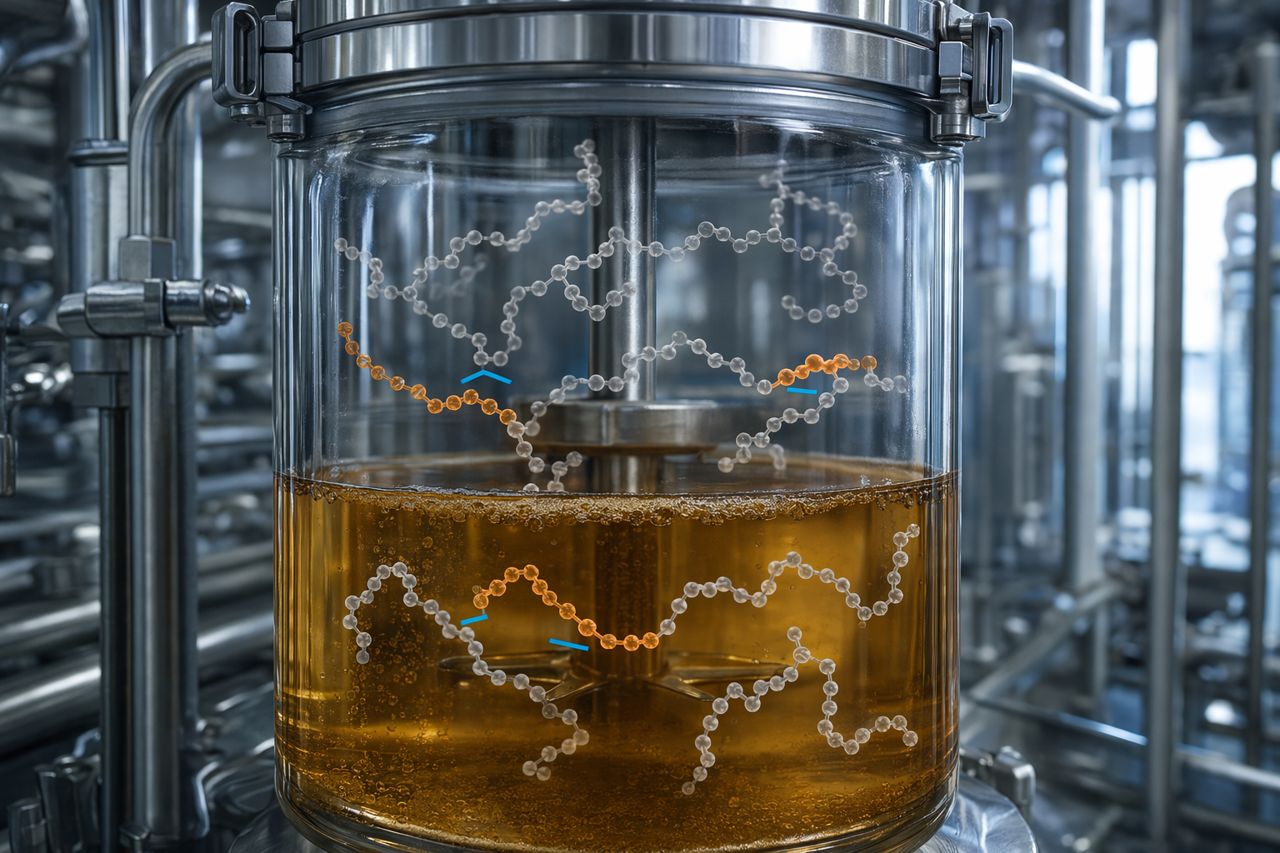
Bitterness is strongly linked to the peptide population created during hydrolysis. When proteins are cleaved, peptide fragments with hydrophobic regions may become exposed. In many systems, these fragments interact with bitter taste receptors and create the sensory profile associated with over-hydrolyzed, poorly controlled, or imbalanced hydrolysates.
Bitterness intensity is influenced by several interacting factors:
- Raw material protein composition and the level of exposed hydrophobic amino acid regions
- Hydrolysis depth, especially when the process creates a high proportion of low-molecular-weight bitter peptides
- Enzyme selectivity, including whether cleavage patterns favor bitter peptide release or subsequent peptide trimming
- pH and temperature control, which affect enzyme behavior and reaction speed
- Residence time, particularly when the batch remains in an active hydrolysis window longer than intended
- Thermal history, including denaturation before or during hydrolysis
- Downstream concentration and drying, which can intensify sensory perception as solids increase
A bitter hydrolysate is rarely caused by one variable alone. It is usually the result of enzyme choice, process control, and formulation decisions working together.
Bitterness management starts before hydrolysis
Bitterness control is more reliable when it is built into the process design rather than corrected at the end. Before selecting an enzyme or adjusting the formulation, manufacturers should define the intended use case of the hydrolysate.
Key questions include:
- Is the product intended for sports nutrition, medical nutrition, infant nutrition, fermentation nutrition, pet food, animal nutrition, flavor bases, or technical applications?
- Is the target profile neutral, savory, dairy-like, meaty, brothy, or function-first?
- Will the hydrolysate be consumed directly, blended into a powder, used as a nutrient source, or masked inside a complex matrix?
- What are the limits for viscosity, turbidity, solubility, and filtration rate?
- Does the process prioritize sensory smoothness, high solubility, rapid digestion positioning, nitrogen availability, or yield?
These answers determine how much bitterness can be tolerated and which levers are commercially realistic.
Process levers that influence bitterness
1. Control hydrolysis depth, not just reaction time
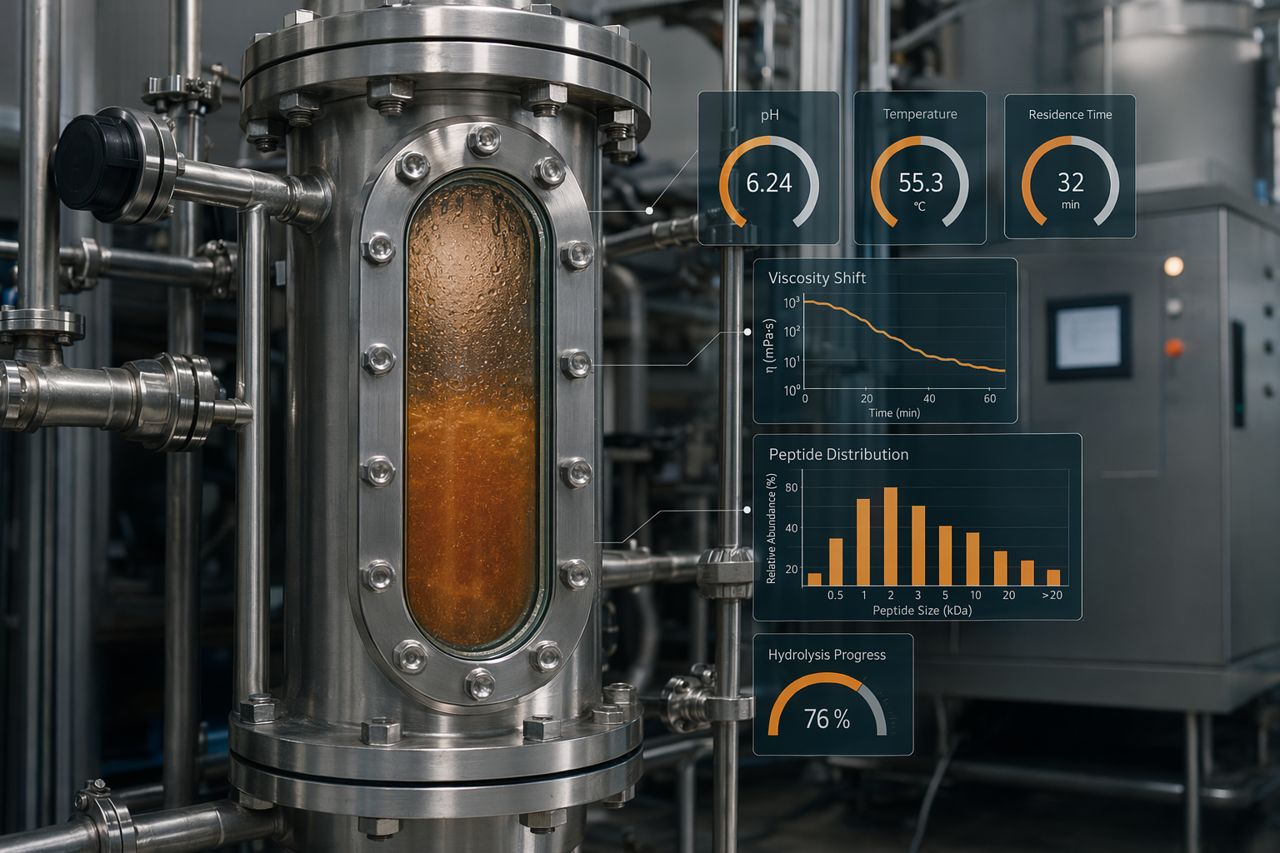
Reaction time is easy to measure, but it is not always a reliable indicator of final sensory profile. Two batches run for the same duration can produce different bitterness levels if raw material quality, temperature ramp, pH drift, solids content, or enzyme dispersion changes.
Better control comes from managing the hydrolysis window as a complete operating system:
- Consistent substrate preparation
- Defined enzyme addition point
- Stable pH and temperature profile
- Repeatable mixing and residence time
- Timely enzyme inactivation
- Documented downstream handling
A tighter hydrolysis window reduces the risk of overshooting into a peptide distribution that creates stronger bitterness or downstream instability.
2. Select enzymes for cleavage pattern, not only speed
A faster hydrolysis rate is not always the best route to a better hydrolysate. Enzyme selectivity affects which peptide bonds are cleaved and which peptide fragments remain in the final product.
For bitterness management, manufacturers often evaluate enzyme systems based on:
- Ability to produce the target hydrolysis profile without excessive bitter peptide accumulation
- Compatibility with the plant’s existing pH and temperature range
- Predictable performance across raw material variability
- Impact on viscosity reduction and solids handling
- Behavior during filtration, evaporation, and drying
- Ease of scale-up from pilot trials to production batches
Enzymeproduct supports enzyme selection with an application-driven view: what the batch must do in the plant and how the final hydrolysate must perform for the customer.
3. Avoid uncontrolled over-processing
Bitterness can increase when the process continues beyond the intended endpoint. This may happen through slow heat-up, delayed inactivation, poor heat transfer, hold-time variation, or uneven enzyme distribution.
Operational controls that help include:
- Clear enzyme dosing procedure and mixing sequence
- Defined start point for the reaction clock
- Controlled ramp to operating temperature
- Batch records that capture pH, temperature, viscosity shift, and hold time
- Rapid, validated inactivation step appropriate for the product
- Minimizing unintended post-hydrolysis exposure before separation or drying
The practical objective is simple: stop the reaction when the peptide profile is where it needs to be.
4. Manage solids and viscosity for better downstream behavior
Hydrolysis changes viscosity, particle behavior, and soluble solids distribution. These changes can influence filtration and separation performance, which in turn affects sensory consistency.
If a process produces more fines, colloidal material, or poorly separated fractions, bitterness may become harder to manage because the final stream contains a broader and less controlled peptide load.
Production teams should monitor how enzyme selection and hydrolysis conditions affect:
- Slurry pumpability
- Heat transfer behavior
- Clarification rate
- Membrane or filter loading
- Evaporator performance
- Powder flow and reconstitution
A bitterness strategy that damages filtration performance may not be commercially useful. The best enzyme program balances sensory targets with plant throughput.
Enzyme strategy: single protease, blended protease, or staged hydrolysis?
Different hydrolysate programs require different enzyme architectures.
Single-enzyme approach
A single protease can work when the raw material is consistent, the application tolerates a defined sensory profile, and the plant needs a simple, robust process. This approach can be attractive for cost control and operational simplicity.
Enzyme blend approach
A carefully selected blend may improve balance between protein breakdown, viscosity reduction, and peptide profile. Blends can be useful when one enzyme opens the protein structure while another helps refine the resulting peptide population.
Staged hydrolysis approach
Staged hydrolysis can provide more control when sensory requirements are tight. A first enzyme step may create the required functional or nutritional profile, followed by a second step designed to reduce harshness or adjust peptide distribution.
The right answer depends on substrate, plant conditions, target specification, and customer sensory requirements. Enzymeproduct helps manufacturers evaluate these options without forcing unnecessary process complexity.
Formulation levers for bitterness reduction
Process control should come first, but formulation can also play an important role, especially for consumer-facing hydrolysates.
Common formulation approaches include:
- Flavor pairing: using cocoa, coffee, vanilla, savory, dairy, or broth profiles that naturally complement the hydrolysate base
- Sweetness balance: adjusting sweetness to reduce perceived harshness without creating a cloying profile
- Salt and mineral balance: supporting savory systems and improving overall taste structure
- Acid control: managing sourness and pH perception to avoid amplifying bitterness
- Fat and mouthfeel systems: improving body and reducing sharp sensory edges
- Masking systems: using targeted ingredients to reduce bitter perception where labeling and cost allow
Formulation is most effective when the hydrolysate base is already controlled. Masking a highly bitter batch is more expensive and less reliable than producing a cleaner base stream.
Raw material variability: a hidden driver of sensory drift
Protein hydrolysate manufacturers often deal with raw material changes between lots, seasons, species, suppliers, or upstream processing methods. Even when the nominal protein source is the same, denaturation level, fat carryover, ash content, connective tissue, heat history, and particle size can shift hydrolysis behavior.
To reduce sensory drift, production teams can build a more resilient process by:
- Qualifying substrate variability before full-scale runs
- Standardizing pre-hydration and slurry preparation
- Controlling initial pH and solids loading
- Using enzyme systems with predictable performance across substrate variation
- Maintaining a small-scale confirmation workflow for new raw material lots
- Tracking sensory outcomes against batch process data
Bitterness management improves when sensory results are connected to process records instead of treated as isolated quality events.
Sensory evaluation should be tied to plant data
Sensory panels and customer feedback are valuable, but they become more actionable when connected to batch parameters.
Useful batch-to-sensory comparisons include:
- Hydrolysis endpoint versus bitterness score
- pH drift versus sensory harshness
- Temperature deviation versus peptide profile shift
- Viscosity reduction versus downstream clarification behavior
- Inactivation timing versus batch-to-batch consistency
- Drying conditions versus perceived intensity after reconstitution
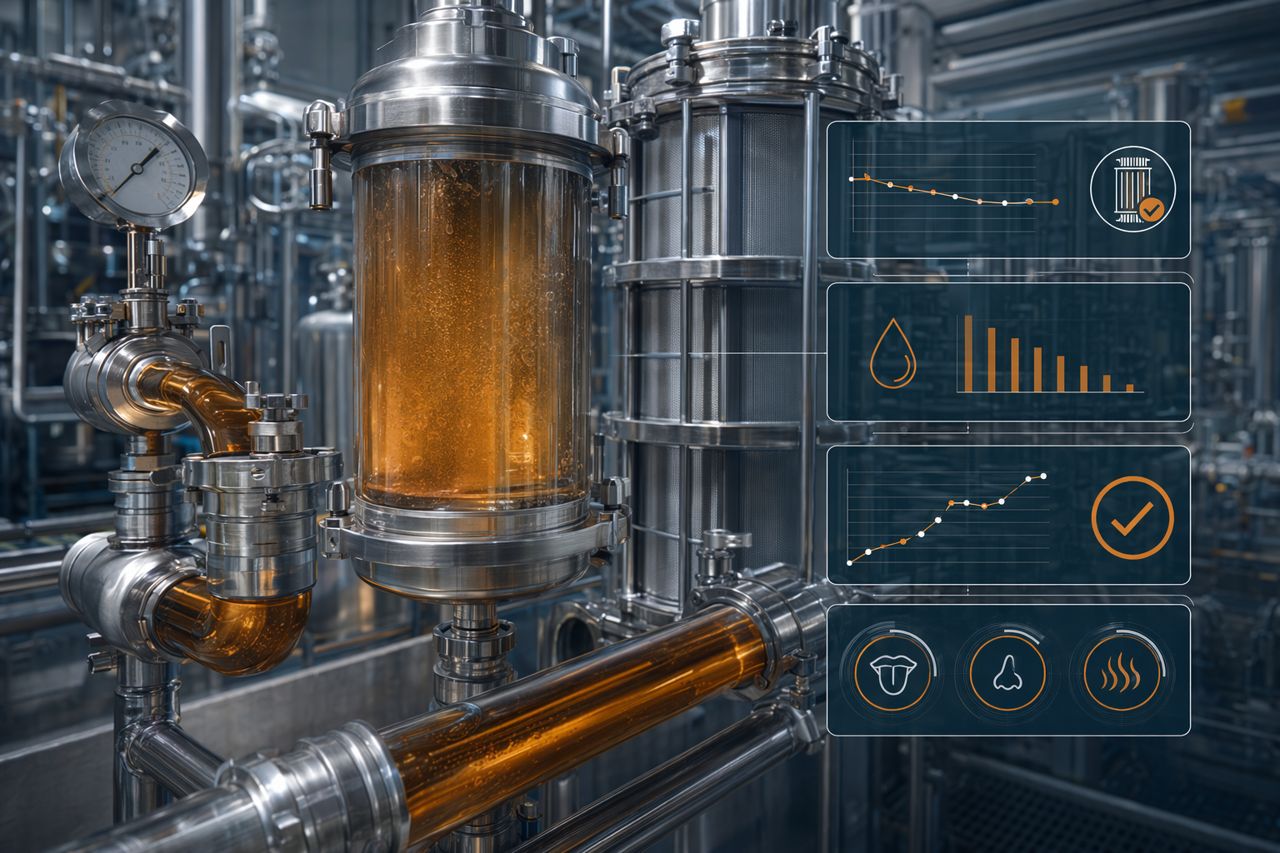
This type of evidence helps identify whether bitterness originates in enzyme selection, process timing, raw material quality, or concentration effects.
Common production issues and practical responses
Issue: acceptable yield, but bitterness too high
Review hydrolysis depth, enzyme selectivity, and inactivation timing. A high-yield process may still produce an unfavorable peptide population if the enzyme program is not aligned with sensory requirements.
Issue: bitterness varies between batches
Check raw material variability, pH control, temperature ramp, mixing performance, and actual residence time. Batch inconsistency often indicates that the hydrolysis window is too wide.
Issue: reducing hydrolysis lowers bitterness but hurts functionality
Consider an alternative enzyme system or staged process. The goal may be to maintain functional performance while changing the peptide distribution that drives bitterness.
Issue: bitterness worsens after concentration or drying
Evaluate solids concentration, heat exposure, Maillard contribution, and flavor release after reconstitution. Concentration can reveal bitterness that was less obvious in the liquid stream.
Issue: masking costs are increasing
Revisit the hydrolysate base. It is usually more efficient to reduce bitterness at the enzyme and process level than to rely entirely on downstream masking.
What Enzymeproduct brings to bitterness management
Enzymeproduct works with protein hydrolysate manufacturers that need enzyme supply aligned with plant reality. That means supporting technical selection, production trials, scale-up, and troubleshooting around the full hydrolysis process.
Our support can help manufacturers:
- Compare enzyme options for target peptide behavior and processing fit
- Build a controlled hydrolysis window around existing equipment
- Improve batch consistency across substrate variability
- Reduce sensory harshness while protecting yield and throughput
- Identify process causes behind filtration, viscosity, or taste drift
- Support product development teams with production-ready enzyme choices
Bitterness management is not a single additive decision. It is a coordinated approach across enzyme selection, hydrolysis control, separation behavior, and formulation design.
Request a quote
If you are developing or optimizing a protein hydrolysate and need an enzyme program that supports better sensory control, Enzymeproduct can help evaluate the process fit.
Use the on-site request a quote form to share your substrate, target application, current process window, and production goals. Enzymeproduct will respond with practical next steps for enzyme selection and technical support.