Fish protein hydrolysate is a process-control opportunity
Fish processing side streams are no longer just a recovery problem. Heads, frames, skins, trimmings, and mince can become fish protein hydrolysate for nutrition, aquafeed, pet food, flavor systems, fermentation nutrients, and specialty ingredient applications.
The commercial question is not whether the protein is present. It is whether the process can convert variable raw material into a hydrolysate that meets specification batch after batch.
That is where enzyme selection, hydrolysis control, and plant support matter. For a protein hydrolysate manufacturer, the enzyme system needs to support defined processing windows, predictable viscosity reduction, manageable bitterness, reliable separation behavior, and consistent peptide profile direction.
Enzymeproduct works as an enzyme supplier for protein hydrolysate production with a focus on practical manufacturing outcomes: controlled hydrolysis, stable yields, and downstream performance that fits real plant conditions.
What to send with a quote request
Enzymeproduct supplies hydrolysate manufacturers, ingredient distributors and resellers on a quote-only basis. To get a usable answer on the first reply, include:
- The enzyme or process you need it for (substrate and target hydrolysate)
- Quantity per order and expected annual volume
- Destination country and preferred pack format
- Documents your quality team needs to review
Pricing, pack format and lead time are quoted per order.
Why fish side streams are difficult to standardize
Fish side streams can vary by species, season, handling time, tissue mix, fat level, mineral content, and freshness. These changes affect how the substrate behaves in the reactor and through downstream separation.
Common production challenges include:
- Variable slurry viscosity at the same solids target
- Inconsistent hydrolysis rate between raw material lots
- Emulsion formation that complicates oil and solids separation
- Fine suspended solids that slow clarification or filtration
- Bitter notes from excessive or poorly directed peptide formation
- Yield drift caused by conservative processing or incomplete extraction
- Odor development when holding time or temperature control is weak
A robust hydrolysis process does not remove raw material variation. It gives the plant a wider, more manageable operating window.
What enzymatic hydrolysis is doing in the reactor
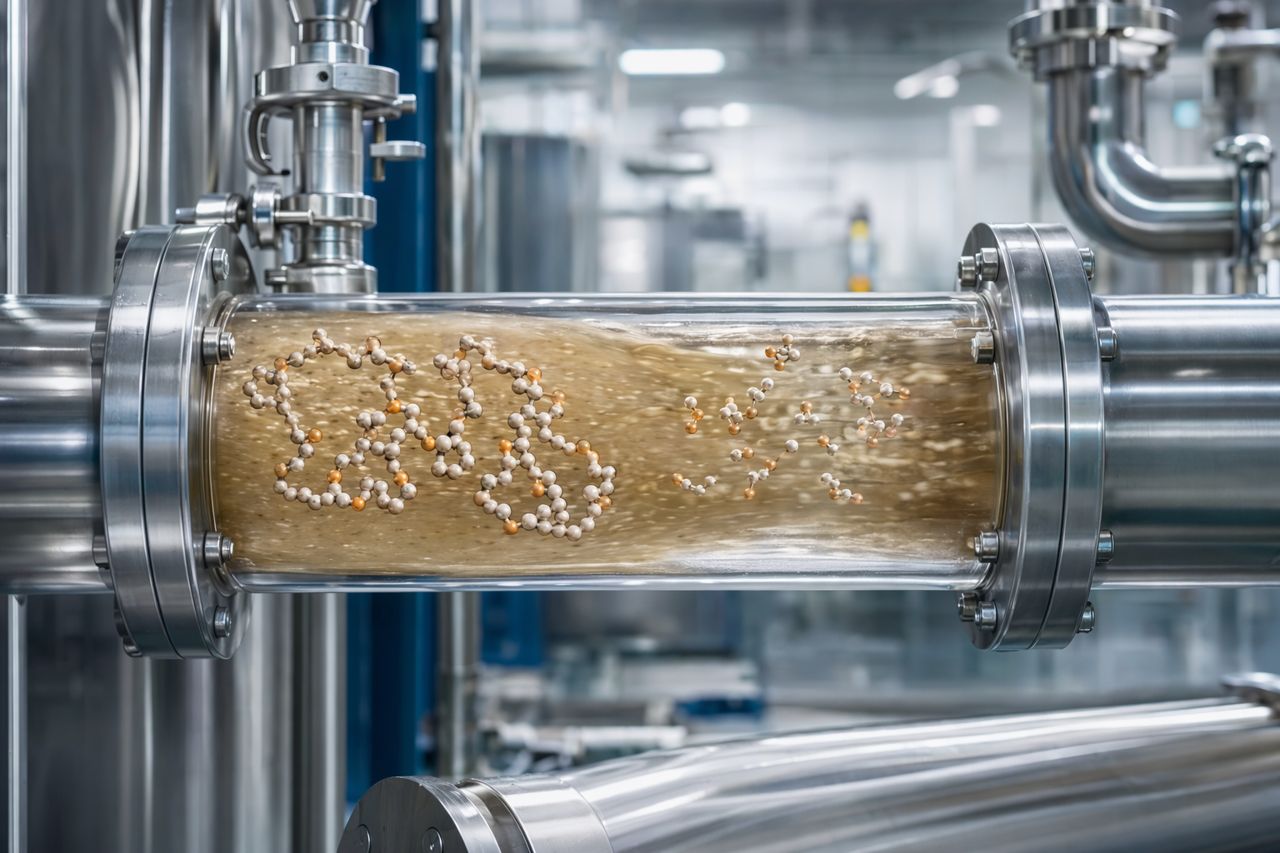
During fish protein hydrolysis, protease systems cleave protein structures into smaller peptides and soluble nitrogen fractions. In production terms, this changes how the slurry flows, separates, dries, and performs as an ingredient.
The enzyme program influences:
- Degree of hydrolysis direction: how far protein chains are opened within the target process time
- Peptide distribution: the balance between larger soluble peptides and smaller fragments
- Viscosity shift: how quickly the slurry becomes easier to pump, mix, and heat-transfer
- Soluble yield: how much protein moves into the liquid fraction under controlled conditions
- Filtration and clarification behavior: how solids, oil, and fine particles separate after hydrolysis
- Sensory risk: how the process manages bitterness, marine notes, and excessive breakdown
For manufacturing teams, the practical target is not maximum breakdown. It is controlled breakdown.
From side stream to ingredient: the main process stages
1. Raw material preparation
Fish side streams are typically size-reduced, mixed with water or process liquor, and transferred to a controlled reactor. Consistent particle size and rapid handling improve heat transfer, enzyme access, and batch repeatability.
Operational priorities:
- Minimize holding time before stabilization
- Control solids loading within mixer and pump limits
- Avoid large bone or skin fragments that create uneven hydrolysis
- Track incoming material by species, tissue type, and freshness
2. Thermal conditioning
The slurry is brought into the selected temperature window for the enzyme system and the microbial control strategy. Heating also affects fat behavior, protein accessibility, and viscosity.
Inconsistent ramp time can create inconsistent hydrolysis. Production teams should treat heat-up as part of the process, not just a preparation step.
3. Enzyme dosing and controlled hydrolysis
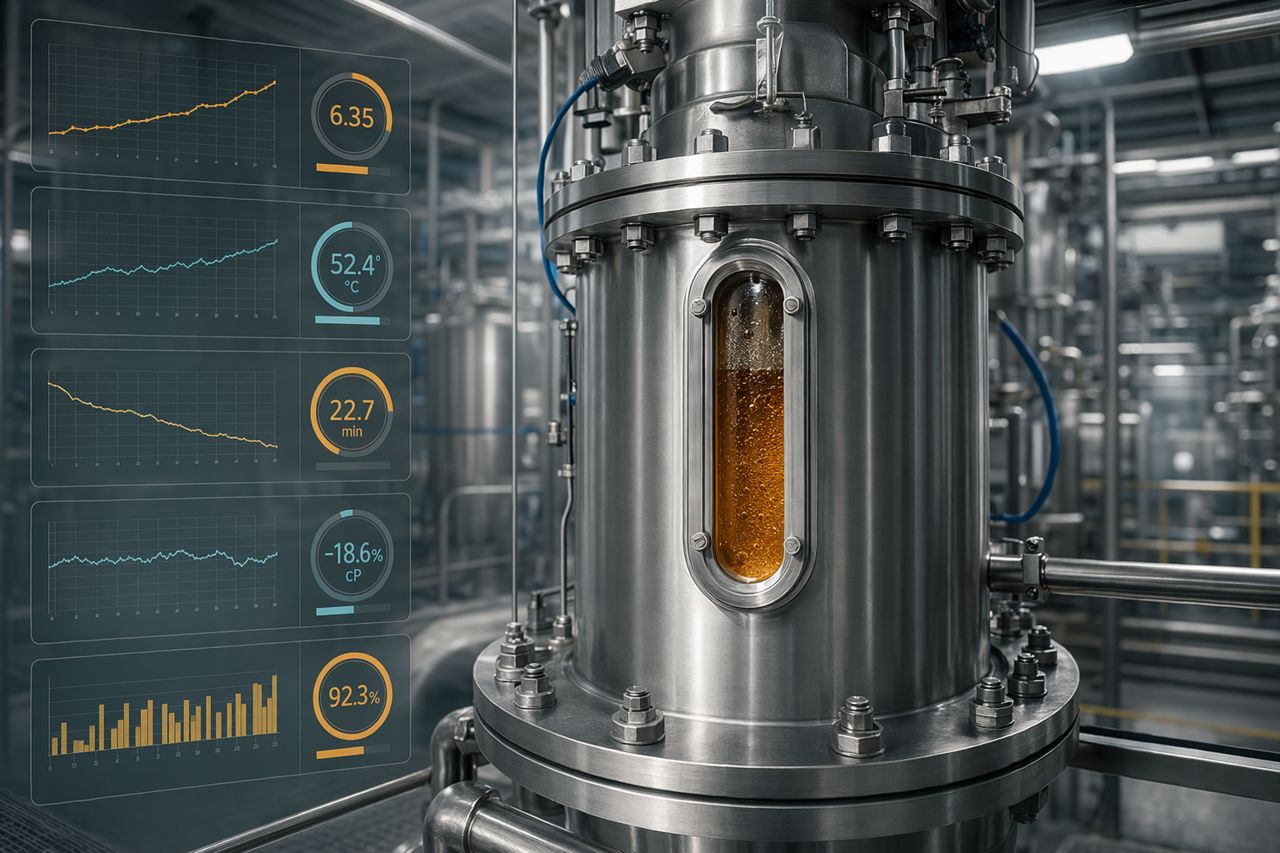
The enzyme is added when the slurry is within the defined process window. From that point, pH, temperature, residence time, agitation, and solids level need to be controlled against the target hydrolysis outcome.
Key control questions:
- Does the slurry reach the expected viscosity change within the normal time window?
- Is soluble protein release tracking consistently across batches?
- Does the process stop before excessive bitterness or over-hydrolysis appears?
- Are downstream centrifuges, screens, or filters seeing stable feed behavior?
4. Enzyme inactivation or process stop
Hydrolysis must be stopped deliberately. This may involve heat treatment, pH adjustment, or another validated process step depending on the plant design and final application.
The stop point affects peptide profile, flavor, separation behavior, and final specification. Delayed or inconsistent stopping can turn a good batch into an unstable one.
5. Separation and clarification
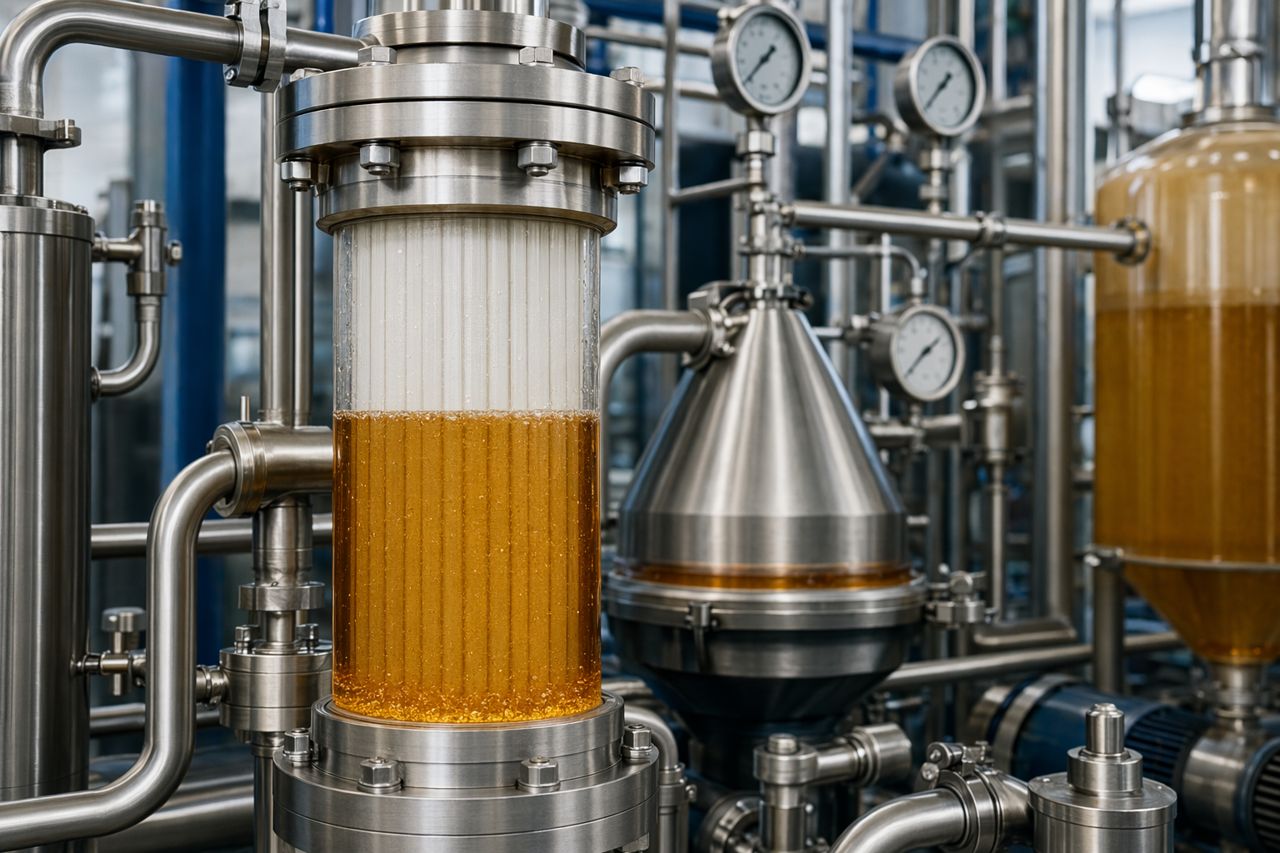
After hydrolysis, the process may separate oil, insoluble solids, and aqueous hydrolysate. The enzyme program can strongly influence how cleanly this step runs.
Signs of a well-controlled hydrolysate stream include:
- Predictable feed viscosity
- Reduced rag layers or stubborn emulsions
- Consistent solids discharge
- Stable flow through filters or membranes
- Lower need for corrective dilution
6. Concentration and drying
Hydrolysate may be concentrated and spray dried, drum dried, or delivered as a liquid ingredient. Upstream control affects evaporator fouling, drying behavior, powder flow, and finished-product consistency.
A hydrolysate that looks acceptable in the reactor can still create downstream cost if it concentrates poorly or produces variable powder behavior.
Choosing enzyme systems for fish protein hydrolysate
There is no single best protease for every fish hydrolysate plant. Enzyme selection should match raw material, equipment, process time, pH and temperature window, final ingredient use, and downstream separation requirements.
A practical selection process should evaluate:
- Target application: feed, food ingredient, flavor, fermentation nutrient, pet nutrition, or specialty use
- Desired peptide profile direction and solubility
- Acceptable bitterness and odor threshold
- Reactor residence time and heating capacity
- Existing pH and temperature limits
- Separation equipment sensitivity
- Liquid versus powder final format
- Cost-in-use, not only enzyme purchase price
Enzymeproduct supports enzyme selection with a production-first view: the right enzyme should help the batch reach specification within the plant’s actual operating constraints.
The importance of processing windows
Fish hydrolysate plants often operate under commercial pressure: raw material arrives in waves, utilities fluctuate, and equipment needs to keep moving. A narrow enzyme process can create bottlenecks.
A useful enzyme program should provide a controlled window for:
- Temperature variation during heat-up and hold
- pH drift caused by raw material variability
- Residence time differences between batch sizes
- Solids loading changes
- Agitation and pump-shear limitations
The goal is not to ignore process control. The goal is to avoid a fragile process where small deviations cause large quality shifts.
Managing yield without losing functionality
Higher soluble yield is attractive, but uncontrolled hydrolysis can reduce ingredient value. Very aggressive breakdown may create bitterness, alter mouthfeel, change drying behavior, or move the product away from its functional specification.
A balanced fish protein hydrolysate program considers:
- Soluble protein recovery
- Final peptide size direction
- Taste and aroma risk
- Ash and fat carryover
- Clarity or turbidity needs
- Powder properties
- Customer application performance
The best yield is the yield that can be sold consistently into the intended application.
Downstream filtration behavior starts upstream
Filtration problems are often treated as equipment problems, but hydrolysis chemistry is a major driver. Over-hydrolysis, emulsification, unstable fats, and fine insoluble particles can all create poor filterability.
Manufacturers should monitor whether enzyme choice and process conditions improve or worsen:
- Centrifuge phase separation
- Screen loading
- Filter press cycle time
- Membrane flux stability
- Evaporator feed consistency
- Final liquid clarity
Enzymeproduct’s technical discussions often begin with the reactor but extend into separation and concentration, because that is where cost and throughput are frequently won or lost.
Building a more repeatable fish hydrolysate process
For production managers, repeatability depends on disciplined control points. A strong program usually includes:
- Raw material classification by species, tissue mix, and freshness condition
- Defined slurry preparation with consistent solids and particle size
- Controlled thermal ramping before enzyme addition
- Specified pH and temperature windows matched to the enzyme system
- Clear hydrolysis stop criteria linked to product performance
- Downstream monitoring for separation, filtration, and drying behavior
- Batch records that connect raw material, process conditions, and final quality
This turns hydrolysis from a reaction into a managed manufacturing step.
Where Enzymeproduct supports manufacturers
Enzymeproduct supplies enzyme solutions for protein hydrolysate production and supports manufacturers in applying them under real plant conditions.
Support can include:
- Enzyme selection for fish side-stream substrates
- Process-window recommendations for existing equipment
- Guidance on hydrolysis control and stop-point definition
- Troubleshooting for viscosity, yield, bitterness, or filtration issues
- Scale-up discussions from trial batches to production runs
- Alignment of enzyme choice with final ingredient application
The focus is practical: help manufacturers convert variable protein streams into consistent commercial ingredients.
Request a quote for fish protein hydrolysate enzyme support
If you are developing or optimizing fish protein hydrolysate production, Enzymeproduct can help evaluate enzyme options against your raw material, process window, and product target.
Use the on-site request a quote form to share your substrate type, current process conditions, target application, the production challenge you want to solve, the quantity per order and the destination. A Enzymeproduct technical representative will respond with the next step and a quotation; pricing, pack format and lead time are quoted per order.